
Hair loss: identify the causes and have them clarified
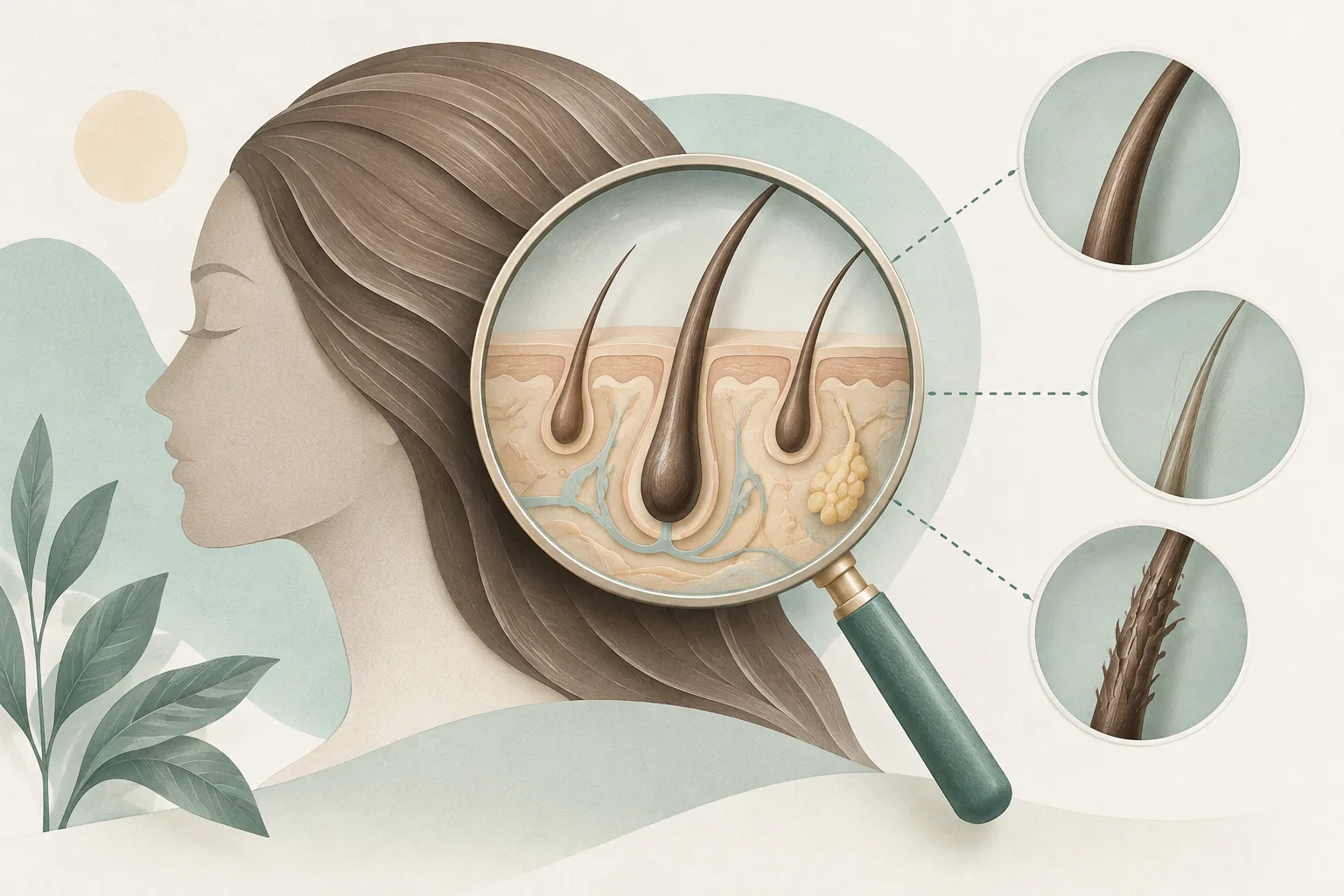
Hair on the pillow or in the brush is initially normal: hair goes through growth and rest phases and eventually falls out. What is noticeable is a clear change compared to your own course, visible thinning or clearly defined bald spots. The cause cannot be reliably determined solely based on the amount of hair counted daily.
Hair loss patterns at a glance
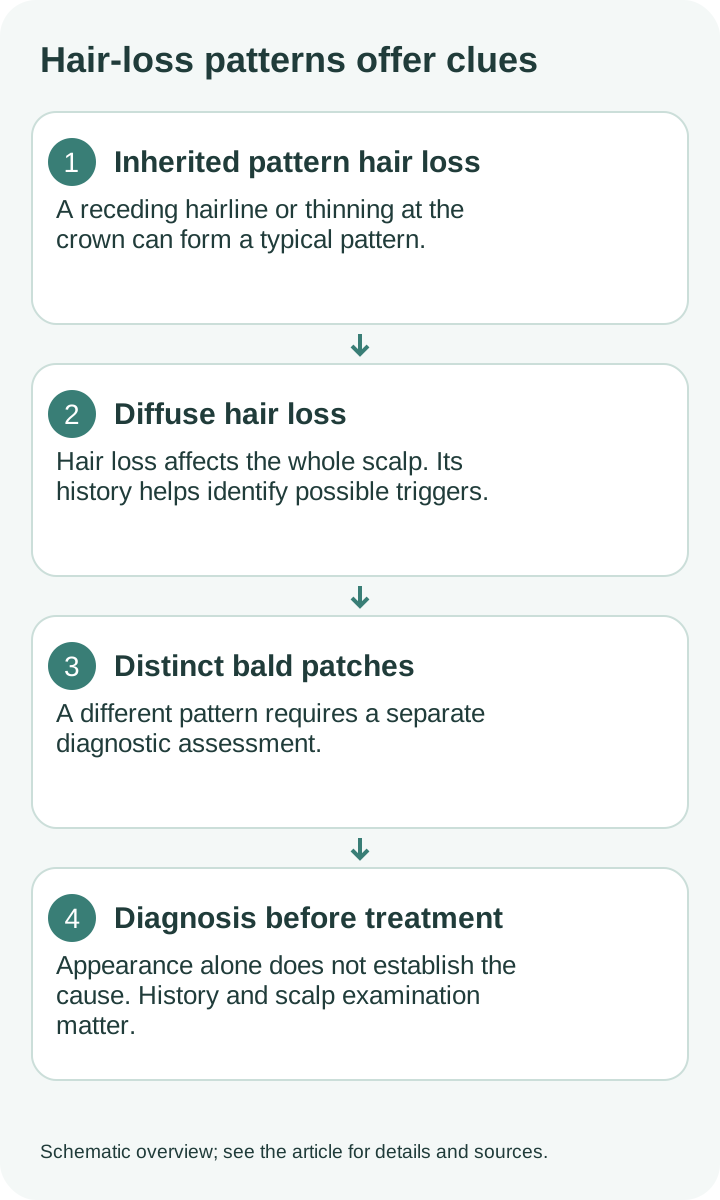
Schematic overview. The explanations and sources in the article also apply to this graphic.
Three common hair-loss patterns
| Type | Typical pattern | What the pattern may indicate |
|---|---|---|
| Genetic hair loss | Receding hairlines and thinning on the top of the head are common in men. | The hair roots react sensitively to hormonal influences; A generally elevated testosterone level is not a necessary cause. |
| Diffuse hair loss | Increased shedding over larger areas of the scalp. | Among other things, illnesses, nutritional deficiencies, hormonal changes or medications can be involved. |
| Circular hair loss | Circumscribed, often roundish bald spots. | An immune-mediated disease is a possibility and requires a different clarification than hereditary hair loss. |
The patterns can overlap. The table is a guide and not a self-diagnosis. Inflammatory or scarring diseases of the scalp must also be recognized because delayed treatment can promote permanent changes.
What the medical examination clarifies
A general medical or dermatological examination begins with the course, distribution and condition of the scalp. Previous illnesses, significant weight changes, pregnancy, medication and family history of hair loss are important. Some triggers only have a delayed effect on the hair cycle. That's why the developments in the last few months are also relevant.
Depending on the suspected cause, targeted blood tests or a closer examination of the hair and scalp may help. Not everyone needs an extensive panel of tests. Do not take iron or other supplements for hair loss alone; a deficiency and its cause need to be confirmed.
When a timely examination makes sense
- Hair loss begins suddenly or progresses significantly.
- Bald patches appear or eyebrows and body hair are affected.
- The scalp hurts, is inflamed, has severe flaking or appears scarred.
- Further complaints or a temporal connection with new medications occur.
Treatment depends on the cause
For hereditary hair loss, topical minoxidil or finasteride, for example, can be used depending on the person and the approved preparation. These possibilities cannot be transferred unchanged to other forms. Finasteride requires a prescription; Psychological and sexual side effects in particular must be discussed before treatment. Additional European risk measures on suicidal thoughts were adopted for oral finasteride preparations in 2025.
For other causes, their treatment is the priority. Whether hair grows back and how quickly a change becomes visible depends on the disease. Treatments can take months and do not ensure complete hair preservation. Standardized photos under similar conditions can help to assess changes during follow-up consultations.
Frequently asked questions
Does a hair vitamin help with any form?
No. A supplement does not automatically treat an immune-mediated condition or inherited sensitivity of the hair follicles. A suspected deficiency needs specific assessment.
Are generics fundamentally different in their effectiveness?
For approved medicines, the active ingredient and dosage form must be taken into account. The guide about Generics and branded drugs explains the basics. A product name alone is not proof of approval.
Can I simply stop taking a suspected medication?
The treating doctor should check whether a connection is plausible and what alternatives exist. Unauthorized changes can worsen the underlying disease being treated.
Related guides
Sources
- https://gesund.bund.de/anlagebedingter-haarausfall-beim-mann
- https://www.gesundheit.gv.at/krankheiten/haut-haare-naegel/haarausfall.html
- https://www.ema.europa.eu/en/news/measures-minimise-risk-suicidal-thoughts-finasteride-dutasteride-medicines
- https://www.gesetze-im-internet.de/amvv/BJNR363210005.html